5 Digital Marketing Trends Freight Forwarders Network Can’t Afford to Ignore

The freight forwarding industry has been evolving rapidly, driven by changes in technology, globalization, and the digital transformation of logistics networks. In today’s hyper-connected world, freight forwarders are no longer solely dependent on traditional business development methods. They need to embrace digital marketing strategies to stay ahead of the competition, expand their networks, and improve their overall business efficiency.
This blog will dive deep into five key digital marketing trends that freight forwarders and logistics companies can’t afford to ignore. We’ll explore how these trends are reshaping the industry and why incorporating them into your marketing strategies is crucial for success.
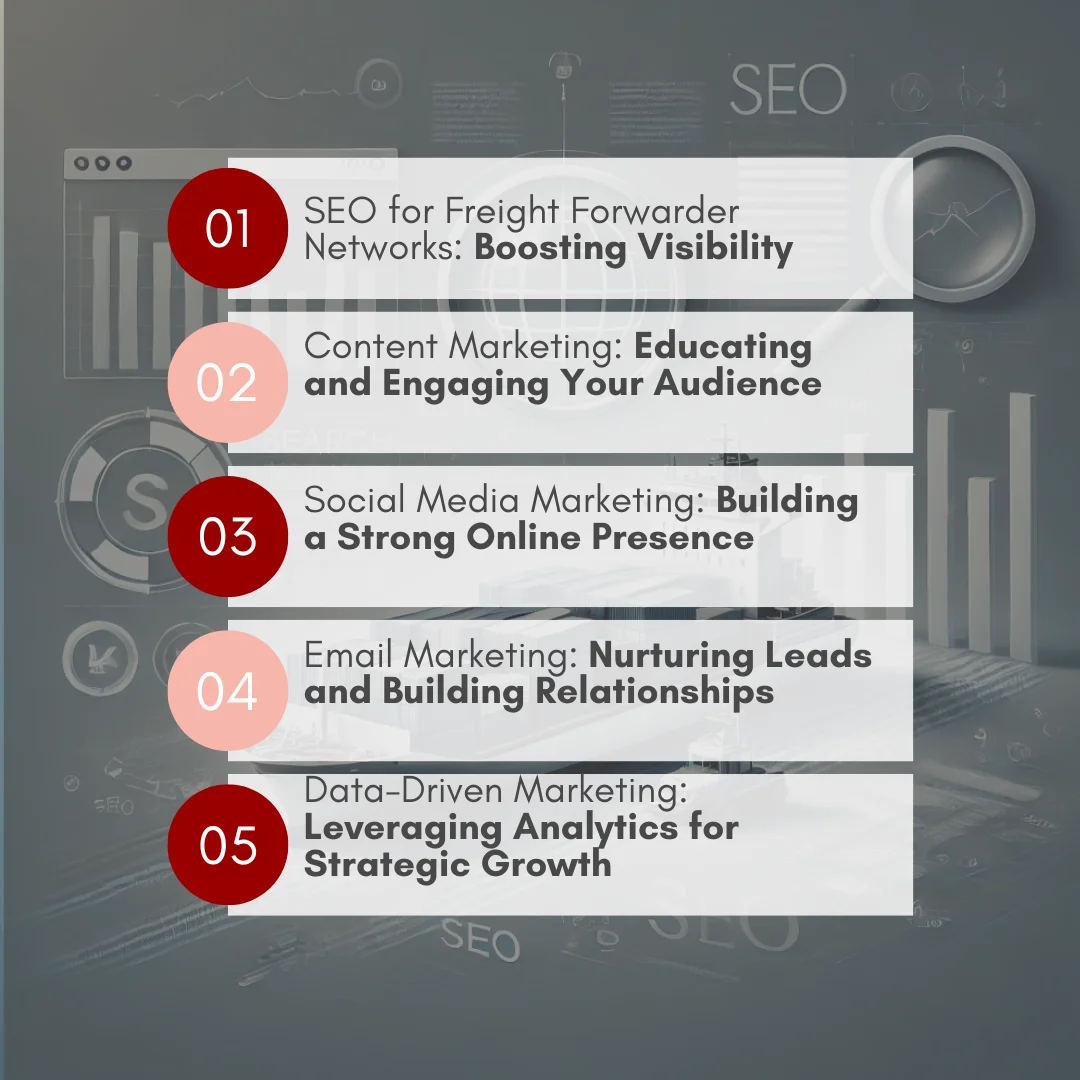
1. SEO for Freight Forwarder Networks: Boosting Visibility
Search Engine Optimization (SEO) is not a new concept, but its importance continues to grow, especially for niche industries like freight forwarding. Optimizing a website for search engines is crucial for freight forwarder networks that want to increase visibility, attract global clients, and stay competitive in an increasingly digitalized world.
Why SEO Matters for Freight Forwarders
In a saturated market, SEO for freight forwarders can provide a distinct competitive advantage by driving organic traffic to your website. When a potential client searches for logistics services, freight forwarding solutions, or customs clearance agents, you want your company to appear on the first page of Google’s results. Research shows that 75% of users never scroll past the first page of search results, meaning that if your website isn’t ranking high enough, you’re likely missing out on business opportunities.
Key SEO Strategies for Freight Forwarders
- Keyword Optimization:Focus on relevant industry terms like “freight forwarding services,” “logistics,” “global shipping,” and “customs clearance.” Use long-tail keywords such as “affordable freight forwarder in [location]” or “best freight forwarder network for SMEs” to capture highly targeted traffic.
- Content Marketing: Create informative and educational content that answers common questions potential clients may have. Blog posts about shipping regulations, global supply chain management, and import/export tips are effective ways to integrate keywords while providing value to your audience.
- Local SEO: Freight forwarding is often location-based, so optimizing for local searches is critical. Ensure your Google My Business profile is updated and encourage satisfied clients to leave reviews. Local SEO is key to helping businesses near you find your services easily.
To learn more about how SEO can benefit freight forwarders, you can explore our SEO Services for Freight Forwarders page, which details strategies to boost your online visibility.
Measuring SEO Success
Implement tools like Google Analytics and SEMrush to track how your SEO efforts are performing. Monitor organic traffic, keyword rankings, and conversion rates. A consistent upward trend will indicate that your SEO strategy is working.
2. Content Marketing: Educating and Engaging Your Audience
Content marketing is a powerful tool for freight forwarder networks looking to establish authority in the logistics industry. Providing valuable, educational content can position your company as a thought leader, build trust with potential clients, and enhance brand recognition.
Why Content Marketing Is Critical
The logistics industry is filled with complex processes that clients may not fully understand. Freight forwarding companies can fill this knowledge gap by producing content that explains the ins and outs of shipping, customs clearance, warehousing, and other logistics services. Offering useful, easy-to-digest information can help prospects feel more confident in choosing your network for their logistics needs.
Types of Content to Create
- Blog Posts:Regularly updated blog posts on topics such as “The Importance of Real-Time Tracking in Freight Forwarding” or “How to Choose the Right Freight Forwarder for Your Business” can drive traffic and keep users engaged.
- Case Studies: Showcase real-world success stories from clients who have benefitted from your services. This provides proof of value and builds credibility.
- Whitepapers and E-books: These in-depth pieces can explore industry trends, regulatory changes, or technological advancements in logistics, offering insights to both current clients and potential leads.
- Videos and Webinars: Videos explaining freight forwarding processes or hosting webinars on global shipping trends allow you to reach visual learners and engage with your audience in real-time.
For an in-depth look at the challenges freight forwarders face today, check out our blog on the Top 5 Digital Challenges Freight Forwarder Networks Face Today.
Best Practices for Content Marketing
- Consistency is Key:To keep your audience engaged, publish content consistently. Aim for weekly or bi-weekly blog posts and supplement with more in-depth pieces like e-books or whitepapers.
- Repurpose Content: Maximize the reach of your content by repurposing it across different platforms. A blog post can become a podcast episode, a video tutorial, or an infographic.
- Optimize for SEO: Always integrate SEO practices into your content strategy by including relevant keywords, meta descriptions, and alt text for images.
3. Social Media Marketing: Building a Strong Online Presence
The role of social media in digital marketing has expanded beyond brand awareness to include customer engagement, lead generation, and even direct sales. For freight forwarder networks,
leveraging social media platforms like LinkedIn, Facebook, and even YouTube can enhance your visibility and attract a global audience.
How Social Media Impacts Freight Forwarders
In today’s digital landscape, social media provides freight forwarders with a platform to showcase their services, expertise, and thought leadership. It allows them to regularly post content that resonates with potential clients, including updates on industry trends, operational improvements, and customer success stories. This builds brand awareness and helps companies stay top-of-mind for businesses in need of logistics solutions.
Another vital component of social media marketing is customer engagement. Through platforms like LinkedIn and Facebook, freight forwarders can engage with clients directly, responding to inquiries, participating in conversations about industry challenges, and sharing helpful insights. This humanizes the company and fosters trust among potential customers.
Lastly, social media can be a powerful tool for lead generation. LinkedIn, in particular, is a goldmine for B2B marketers. Freight forwarders can run targeted ads that reach decision-makers at businesses that rely on logistics services, ensuring their marketing message gets in front of the right people. Engaging content, coupled with effective advertising, can help generate qualified leads that convert into business opportunities.
Best Practices for Social Media
Consistency in posting, active engagement with followers, and a focus on visual content such as infographics, videos, and customer testimonials will keep your audience engaged and help differentiate your brand from the competition.
4. Email Marketing: Nurturing Leads and Building Relationships
Despite the rise of social media, email marketing remains one of the most effective digital marketing strategies for freight forwarders. Email allows for personalized, targeted communication, making it ideal for nurturing leads, building relationships with existing clients, and driving conversions.
The Importance of Email in the Freight Forwarding Industry
Email marketing offers a direct line of communication to your leads and customers. In a logistics-driven world where clients need frequent updates on their shipments, regulatory changes, or market trends, email is an efficient way to stay connected.
Types of Emails Freight Forwarders Should Send
- Newsletters:Regularly updating your clients and prospects with industry news, company updates, and service promotions helps maintain engagement and demonstrates your ongoing value.
- Service Updates: Notify your clients of new services, technological advancements, or geographic expansions that may benefit their logistics needs.
- Lead Nurturing Campaigns: Use automated email workflows to nurture leads by providing them with valuable information at different stages of their decision-making journey. For example, send a series of emails highlighting case studies, testimonials, and service benefits to help guide them toward conversion.
Best Practices for Email Marketing
Segment your audience based on factors like geography, industry, and where they are in the sales funnel to ensure you’re sending the most relevant content. Emails that address recipients by name and offer tailored recommendations are more likely to convert than generic mass emails.
5. Data-Driven Marketing: Leveraging Analytics for Strategic Growth
In today’s digital landscape, data is everything. Freight forwarders need to adopt data-driven marketing strategies to stay competitive. By collecting, analyzing, and acting on customer and marketing data, you can make more informed decisions that drive results.
Why Data-Driven Marketing is Essential
Data-driven marketing allows freight forwarders to identify which strategies are working and which aren’t. This insight enables you to optimize your marketing efforts, allocate resources more effectively, and ultimately improve ROI.
Types of Data Freight Forwarders Should Analyze
- Customer Data: Analyzing client demographics, preferences, and behavior can help tailor your marketing strategies to better meet their needs. For example, knowing which services are most popular among different customer segments can inform targeted campaigns.
- Website Analytics: Use tools like Google Analytics to track how visitors are interacting with your site. Monitor metrics like bounce rate, time on site, and conversion rate to identify areas for improvement.
Adopting data-driven marketing strategies can help freight forwarders fine-tune their marketing campaigns to ensure they resonate with their target audience, thereby driving greater results.
Conclusion
As the freight forwarding industry becomes more competitive and digitized, networks can’t afford to ignore these critical digital marketing trends. By optimizing for SEO, creating valuable content, leveraging social media, nurturing leads through email, and adopting data-driven marketing strategies, freight forwarder networks can expand their reach, enhance customer engagement, and stay ahead of the competition.
By embracing these trends now, your freight forwarder network will not only attract more clients but also ensure sustained growth in a rapidly evolving logistics landscape.
For further reading, here’s a useful article from Forbes on the future of logistics and a detailed report on digital transformation in logistics from McKinsey.