Why Freight Forwarders Need a Mobile-Friendly Website: Key Features to Include

Introduction:
The digital environment is changing so rapidly that it shakes the very foundations of global industries. The logistics and freight forwarding industries are no exception to such changes. As technology has become more of an integral part of daily business, an online presence is necessary for any company if it is to survive. More people than ever before can now access the internet from mobile devices. If your website is not mobile-compatible, it fails to do good business.
With the pace, digitization of our world is taking place, it goes without saying that mobile-friendly websites no longer add a nice-to-have but a business necessity. Recent studies indicate that more than 50% of internet traffic across the whole globe is mobile traffic, and this figure is bound to keep rising with the tremendous power being revealed with mobile devices and internet connectivity across large areas of the globe. Freight forwarders specifically must ensure that their online platforms are mobile-friendly. It may be the potential client requesting a quote or an existing customer tracking shipment, but at the end of the day, the success of a freight forwarding business on mobile is user experience.
In this blog, we are going to outline why a mobile-friendly website is important for freight forwarders and what the fundamental features every logistics company must cover. Additionally, we will analyze how freight forwarders can differentiate themselves in a digital world where content suffuses every corner, and being distinctive is as hard as it has ever been.

Problem: Content Overload and Differentiation
With a bombardment of content on a daily basis, it’s hard to stand out today in this world that is utterly hyper-connected. Whether by social media, search engines, or company websites, the Internet is literally crammed full of information. This presents a special challenge to freight forwarders: how do you stand out when everyone competes for online attention?
Over-contenting, especially in service-oriented markets such as logistics and freight-forwarding industries where there are many players with almost similar services, will reduce the ability of a potential customer to pick out one service provider from the other. No matter how prestigious the freight forwarding business is, having a weak digital presence that cannot cut through the noise can easily lose out on potential business. It gets even worse when companies fail to design their websites to fit effectively onto mobile phones, and as such, the user experience will be terrible enough to send potential customers running.
Mobile-Friendly Website Development
That’s where mobile-friendly website development can help. This is essentially creating a fantastic user experience and ensuring that your content is easily accessible to the user using whatever device they are on. Optimizing your website for mobile will set your business apart from your competition and give you something unique: a digital experience that resonates with your target audience.
Why Do Freight Forwarders Need a Mobile-Friendly Website?
Freight forwarders are at the core of worldwide trade; hence, it is all about transporting and coordinating commodities over borders. The industry requires a quick response in accessing information about tracking shipments, pricing, and services. A mobile-friendly website offers a sure key in providing the client an easy, on-the-go access towards the services they need.
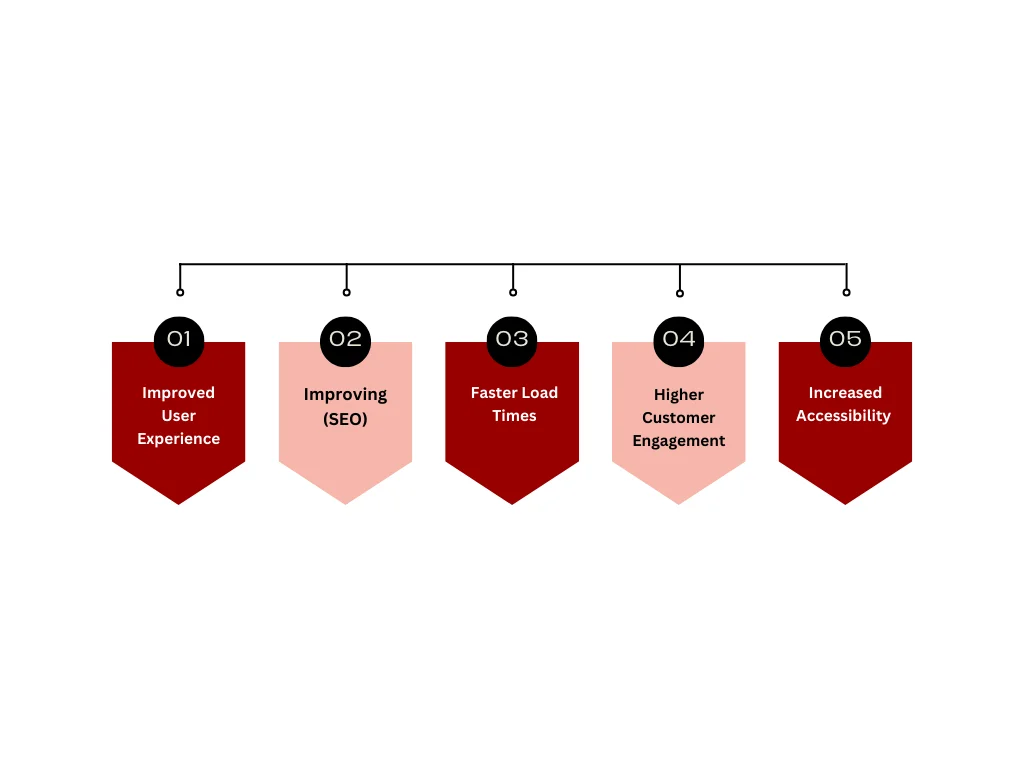
Reasons Freight Forwarders Must Invest in a Mobile-Friendly Website:
1. Improved User Experience
In today’s digital environment, it is imperative that users have a seamless experience. They expect to come to your website over their mobile device, navigate intuitively and very easily use. If your site isn’t smartphone-optimized, customers will struggle to find what they are looking for, which might set them up for frustration, higher bounce rates, and lost business.
A mobile-friendly website lets all users comfortably look up information on your website without having to constantly zoom in or scroll down.
2. Improving Search Engine Rankings (SEO)
Mobile optimization impacts the rank given your website in the search engine. Google started mobile-first indexing in 2018, meaning the mobile version of your website is referred to by Google’s search algorithms to look up rankings. A non-mobile-friendly website might rank lower in search results and keep a very low ranking on the search pages, keeping you unable to reach relevant clients searching for freight forwarding services.
3. Faster Load Times
Speed for the mobile version of the site is very essential. As time equals money, customers expect that the sites should load up quickly when they access websites using their mobile devices. Studies indicate that when a mobile website takes more than three seconds to load, the users will abandon it.
4. Higher Customer Engagement
A mobile-friendly website opens gates for new channels of engagement for customers. Easy addition of live chat, shipment tracking, and contact forms will bring more interactivity to the freight forwarder website, which would engage the customers even further in this way of a more dynamic and response-giving experience.
5. Increased Accessibility for All Customers on-the-go
Merchandise forwarding clients are constantly on the move managing shipments from an airport, warehouse or shipping dock. The mobile-friendly website gives them the flexibility and liberty to access your services from anywhere at any time, without requiring them to be in front of a desktop computer.
Key Features for Mobile-Friendly Website for Freight Forwarders
Making your website mobile-friendly is not just a matter of condensing your content onto a smaller screen; this way, you want your website to provide an optimal user experience for your visitors by including the most crucial factors:
1. Responsive Design
Responsive design is what any mobile-friendly website must start from. A responsive website automatically adjusts its layout according to the dimensions of a used device – a guarantee of uniform and pleasant user experience as the switch can go from smartphone to tablet to desktop computer.
2. Clear Calls-to-Action (CTAs)
Freight forwarders commonly rely on their websites to originate leads and stimulate conversions. To provoke activity from your visitors, clear and very-present calls to action should be plentiful on your mobile site.
3. Fast Loading Time
Mobile users don’t have much patience when their website loads at a slow pace. For a mobile site to load without delays, image, script, and server response time must be optimized.
4. Simple Navigation
Navigation on mobile should be intuitive. Do not make an effort to fit all of the information on your website on a small mobile screen. Instead, use a narrowed-down menu with easy navigation to find what they need.
5. Real-Time Shipment Tracking
Shipment tracking is probably the most important feature that a website may offer in the freight forwarding industry. By incorporating a real-time tracking tool on your mobile site, you can provide customers with instant updates on the status of their shipments.
6. Mobile-Friendly Forms
Most freight forwarders will ask for quotation request, booking, and inquiry forms to be submitted by customers. Form optimization must be included in order to ensure an optimum experience for users of your mobile website.
7. Live Chat Support
Live chat is becoming increasingly more common with mobile websites, where businesses can reach their customers in real time to provide support.
8. Secure Payment Gateways
If you are offering an online booking and payment facility to your customers, make sure that the payment gateway is mobile-enabled and secure.
9. Optimizing for Mobile SEO
Besides catering to a good user experience, your mobile website should also be search engine optimized.
Conclusion
In the fast world of freight forwarding, a website increasingly mobile-friendly is no longer a luxury but rather a necessity. Freight forwarders will need to make accommodations for this modern consumer by ensuring that there is a seamless mobile experience.
In so doing, investing in a mobile-friendly website is one of the most vital decisions you’ll make in pursuit of future-proofing your freight forwarding business and giving your firm long-term success in an increasingly mobile-driven world.