The Role of AI and Automation in Modernizing Freight Networks: The Future of Logistics
Freight transportation has been the backbone of global trade for centuries, facilitating the movement of goods across vast distances. Historically, the logistics industry has been characterized by manual processes, human decision-making, and a significant reliance on conventional transport systems. However, as global commerce becomes more complex, the traditional logistics model is being pushed to its limits. Freight networks now face increasing demand for efficiency, transparency, and reliability—especially in an era where e-commerce is booming, and consumer expectations are at an all-time high.
Enter AI (Artificial Intelligence) and automation, two technologies that are rapidly revolutionizing freight networks. These innovations promise to transform logistics by improving operational efficiency, reducing costs, enhancing decision-making, and paving the way for groundbreaking technologies like autonomous trucks. This blog explores how AI and automation are modernizing freight networks, the role of autonomous vehicles, and how freight forwarders can adapt to this technological shift.
AI in Logistics: Enhancing Operational Efficiency
Artificial Intelligence is already playing a crucial role in logistics, with applications spanning across various facets of freight networks, from inventory management to route optimization and demand forecasting. Here’s a closer look at how AI is revolutionizing the logistics industry:
1. Predictive Analytics and Demand Forecasting
One of the most impactful applications of AI in logistics is its ability to process vast amounts of data to predict future demand patterns. By analyzing historical shipping data, seasonal trends, and real-time market conditions, AI algorithms can forecast demand for specific routes or products. This predictive power enables freight companies to optimize resource allocation, minimize overcapacity, and reduce waste. Companies can also better plan for fluctuations in demand, ensuring that the right amount of goods is shipped at the right time.
2. AI-Powered Route Optimization
Route optimization is another area where AI excels. Traditionally, determining the best route for a delivery required human intervention, which was time-consuming and prone to errors. AI-powered systems can analyze traffic conditions, weather forecasts, fuel costs, and other factors in real-time to choose the most efficient route. This reduces fuel consumption, cuts delivery times, and improves overall efficiency.
For example, companies like DHL and UPS are already leveraging AI algorithms to optimize their routes. These AI systems also adapt to changing circumstances, like road closures or sudden weather events, offering dynamic, real-time rerouting options. Learn more about how UPS uses AI for smarter logistics.
3. Smart Warehousing and Inventory Management
In modern freight networks, warehousing plays a critical role. AI-driven automation has transformed traditional warehousing operations, making them smarter and more efficient. AI systems can track inventory levels, predict restocking needs, and automatically order new stock when inventory is running low. This eliminates human error, reduces stockouts, and ensures that warehouses are always well-stocked and optimized for efficient picking and packing processes.
Additionally, AI-powered robotics are being used in warehouses to handle repetitive tasks such as sorting, packing, and loading goods. This not only increases efficiency but also reduces labor costs and human error.
By optimizing warehouse operations, companies can better integrate their logistics systems, aligning them with modern SEO strategies to improve their digital presence. You can read more on how SEO strategies are being employed in logistics to increase efficiency here on ourSEO page.
Autonomous Trucks: Redefining Freight Transportation (500 words)
While AI is enhancing the efficiency of current freight networks, autonomous trucks represent a truly transformative future. The logistics industry is on the cusp of a revolution, with driverless vehicles poised to change how goods are transported over long distances.
1. The Rise of Autonomous Trucks
Autonomous trucks, powered by AI and sophisticated sensors, are designed to drive themselves with minimal human intervention. These trucks use a combination of machine learning algorithms, radar, LIDAR, and GPS to navigate roads, avoid obstacles, and optimize driving conditions.
Companies like Tesla, Waymo, and TuSimple are at the forefront of developing autonomous truck technology. These vehicles have the potential to reduce human error, one of the leading causes of road accidents. They also promise to drive more efficiently than human drivers, reducing fuel consumption and emissions while ensuring on-time deliveries.
2. The Benefits of Autonomous Trucks
The deployment of autonomous trucks brings numerous benefits to freight networks:
- Increased Efficiency:Autonomous trucks can operate 24/7 without the need for breaks, unlike human drivers who are subject to rest requirements. This leads to faster delivery times and higher utilization rates.
- Reduced Operating Costs: By eliminating the need for drivers and minimizing fuel waste through optimized driving, autonomous trucks can significantly reduce operating costs. This is especially important as fuel prices and labor costs continue to rise.
- Improved Safety: Autonomous trucks are equipped with advanced safety systems that allow them to detect and avoid collisions, minimizing accidents on the road. These systems can respond to hazardous conditions faster and more accurately than human drivers.
- Environmental Impact: Through optimized driving patterns and reduced idle time, autonomous trucks can contribute to lower carbon emissions, aligning the logistics industry with global sustainability goals.
3. Challenges to Autonomous Truck Adoption
Despite the potential benefits, the widespread adoption of autonomous trucks faces several challenges:
-
- Regulatory Hurdles:The lack of a standardized regulatory framework for autonomous vehicles across different regions poses a significant barrier. Governments and policymakers need to develop laws that account for the safety, liability, and ethical concerns surrounding driverless trucks.
- Public Perception: There is still a considerable amount of skepticism from the public regarding the safety of autonomous trucks. Companies need to work on building trust by demonstrating the reliability of these vehicles.
- Job Displacement: One of the more controversial aspects of autonomous trucks is the potential impact on truck drivers’ livelihoods. While automation may create new roles in maintenance, programming, and monitoring, the industry must address the displacement of jobs that will occur as a result of this shift.
Freight Forwarders: Adapting to the AI-Driven Future (500 words)
Freight forwarders—the intermediaries who organize shipments for individuals or corporations—play an integral role in the logistics industry. They manage everything from documentation to coordinating transportation, ensuring that goods are delivered efficiently. However, as AI and automation take over many of the logistical processes, freight forwarders must adapt to stay relevant.
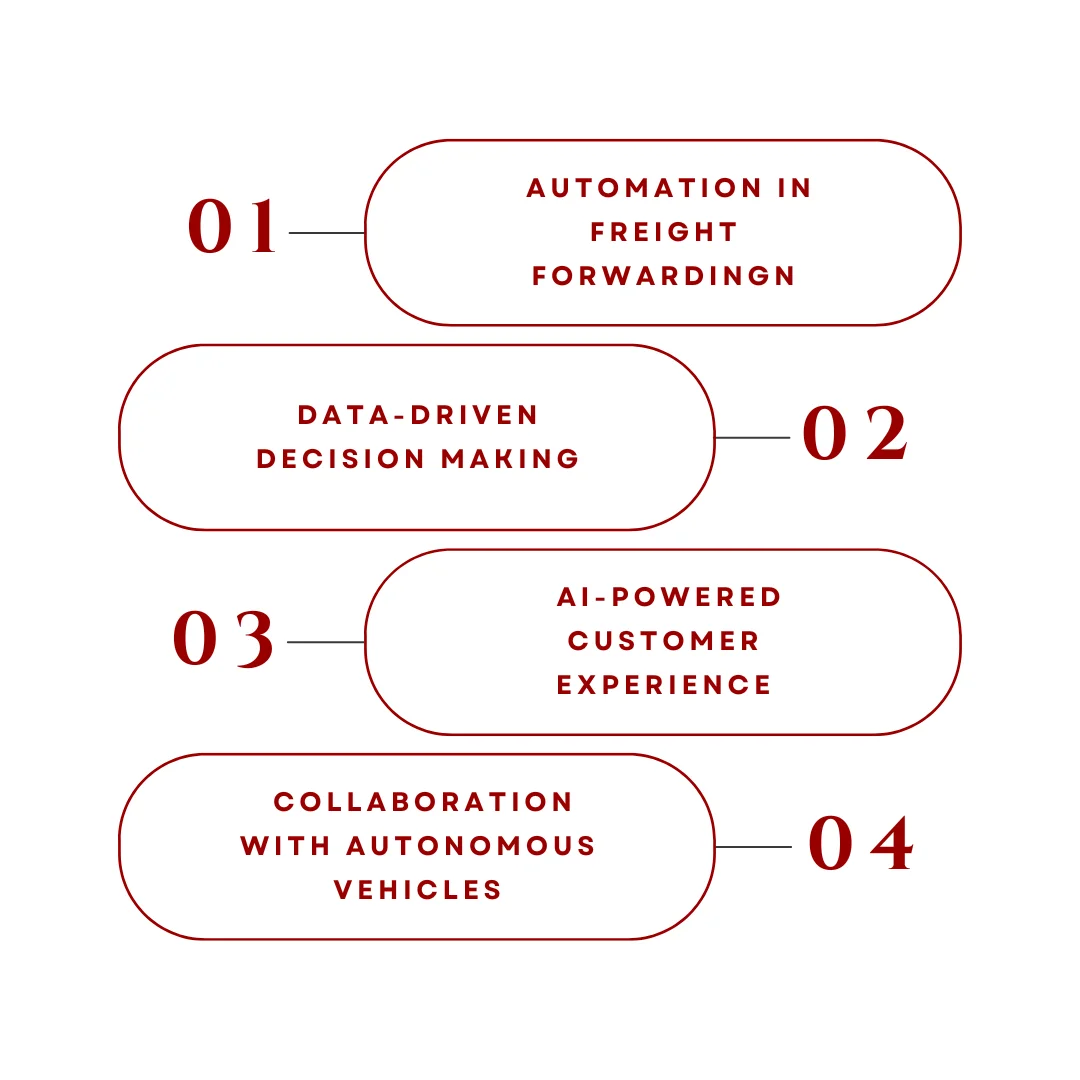
1. Automation in Freight Forwarding
AI and automation are streamlining many aspects of freight forwarding. For example, traditional manual paperwork and documentation processes are being replaced by AI systems capable of processing and verifying documents in seconds. Automation also helps with customs clearance and regulatory compliance, reducing the chances of human error.
Forwarders can also leverage AI-driven platforms that provide real-time tracking of shipments, offer instant freight quotes, and manage route optimization. These platforms make the entire shipping process more transparent and predictable for customers, improving customer satisfaction. More can be learned about how platforms leverage AI to improve logistics at the Gartner website here.
2. Data-Driven Decision Making
Freight forwarders are increasingly relying on data analytics and AI to make more informed decisions. By analyzing data on shipping routes, delivery times, and market trends, forwarders can recommend the most efficient and cost-effective solutions to their clients. AI-powered logistics management systems can predict disruptions in the supply chain, such as port delays or natural disasters, allowing forwarders to reroute shipments before issues arise.
3. AI-Powered Customer Experience
AI is also reshaping the customer experience in freight forwarding. Through chatbots and AI-driven customer support, freight forwarders can provide 24/7 assistance to their clients. AI can answer queries, track shipments, and provide quotes in real time, drastically reducing response times and improving overall service quality.
Additionally, AI allows for personalization. By analyzing customer data, AI systems can recommend tailored shipping solutions based on a client’s shipping history, preferences, and business needs.
4. Collaboration with Autonomous Vehicles
Freight forwarders will also need to adapt to the rise of autonomous trucks. Forwarders who can seamlessly integrate autonomous vehicles into their supply chains will have a competitive edge. These vehicles promise faster delivery times and more predictable schedules, making them ideal for forwarders seeking to optimize their operations.
For more details on how web platforms can assist freight forwarders in adapting to these changes, check out our web development services.
Conclusion: The Future of Freight Networks
AI and automation are undoubtedly modernizing freight networks, driving unprecedented efficiency, safety, and cost savings across the logistics industry. From AI-powered route optimization and smart warehouses to the advent of autonomous trucks, these technologies are transforming how goods move through the supply chain. Freight forwarders, in particular, are at a critical juncture, as they must embrace these innovations to stay competitive in an increasingly automated world.
However, the road to full automation is not without its challenges. Regulatory hurdles, public perception, and job displacement concerns must be addressed as the logistics industry evolves.
Nevertheless, the benefits of AI and autonomous trucks—faster delivery times, lower costs, improved safety, and reduced environmental impact—make them a promising solution for the future of freight transportation.
As we look ahead, it’s clear that the integration of AI and automation will be critical for businesses looking to thrive in a competitive and increasingly complex global marketplace. Those that embrace these technologies will be well-positioned to lead the next generation of freight networks.