OpenAI Dots Work While You're Away Threat Or Goldmine For An IT Consultant Company?
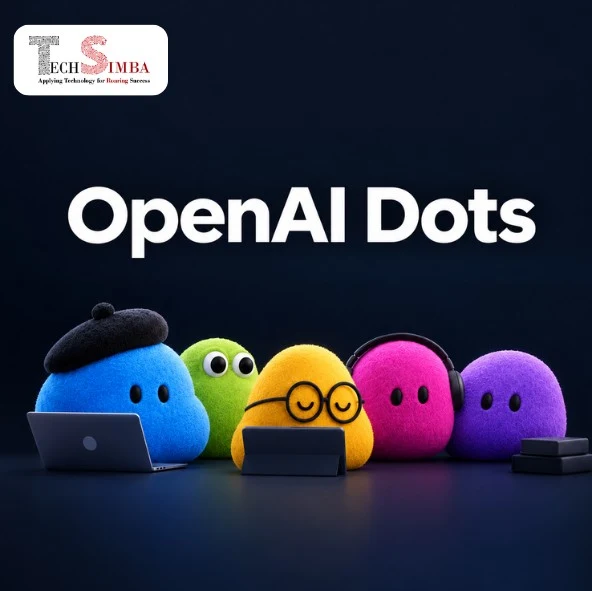
AI is changing how businesses work. Until now, most companies used AI when they needed an answer, a piece of code, an idea, or a quick analysis. OpenAI Dots takes that idea further. Instead of waiting for every new instruction, these AI agents can continue working on tasks in the background.
That changes the conversation for an IT consultant company. We are no longer talking only about AI helping employees work faster. We are talking about AI taking responsibility for parts of a project and continuing the work with less human involvement.
For Indian IT companies, this deserves attention. The question is no longer whether businesses will use AI. The bigger question is how much work AI agents will handle and how quickly companies can adapt.
What Are OpenAI Dots?
OpenAI Dots are designed to work as always-on AI agents. OpenAI introduced them on September 29, 2026. Dots are AI agents that keep working in the background, even after you close the chat.
That makes Dots different from a normal chatbot. You ask a chatbot a question, it gives you an answer, and you decide what to do next. Dots are designed to take a goal, break it into steps, work through those steps, and return with progress or results.
For many technology projects, that difference matters because teams handle plenty of repetitive work. Developers spend time checking code. Teams prepare documents. Analysts study data. Testers repeat similar checks. Consultants collect information and track project updates.
An AI agent can potentially take over parts of that work while the human team focuses on decisions and problems that need experience.
Why “Always-On” AI Is Different
The biggest change with Dots is not simply that the AI can perform tasks. The bigger change is that it can keep working on them.
Think about a software project. A traditional AI assistant might help a developer write a function when the developer asks for it. An always-on agent can work on a larger goal, track progress, test changes, and return to the user when it needs a decision.
That could change how an IT consultant company plans its projects.
Instead of assigning people to every small task, a team could give AI agents clearly defined responsibilities. The human team could then review the results, handle exceptions, and make important decisions.
From AI Assistant to AI Employee?
This is where OpenAI Dots gets interesting.
Calling Dots an “AI employee” would oversimplify the technology. An agent does not have the same responsibility, judgment, or accountability as a human employee. But the comparison helps explain why this development feels different.
An AI assistant helps you do a task.
An AI agent can take ownership of a defined task.
That difference could have a major impact on businesses.
Imagine a company that receives hundreds of customer feedback messages every week. A Dot could monitor the feedback, identify common problems, organize the information, and prepare a report for the product team.
The human team still decides what action to take. But they no longer need to spend hours collecting and organizing the information.
For an IT Solution Company In India, this type of automation could become part of everyday business operations. Teams could use agents for research, reporting, documentation, testing, customer feedback analysis, and other repetitive work.
The same idea can extend into marketing workflows. An agent could help an SEO team organize keyword research, monitor content tasks, or prepare routine reports for SEO services in Indore. It could also support a social media marketing firm by organizing content ideas, performance data, and campaign reports.
The real value comes from combining AI speed with human judgment.
What Could Dots Change in Software Development?
Software development could become one of the biggest areas affected by AI agents.
Developers already use AI for coding, debugging, documentation, and testing. Dots takes the idea further by allowing an agent to work across multiple steps instead of handling only one request at a time.
An agent could help investigate a problem, understand the related code, prepare a change, run tests, and report what happened.
That does not remove the need for developers. It changes where developers spend their time.
An IT service provider in India can use this model to reduce repetitive work while keeping experienced developers involved in architecture, reviews, security, and final decisions.
The same workflow can support web development solutions. An agent could help review requirements, organize development tasks, check documentation, and prepare testing notes while developers handle architecture and implementation.
What Does This Mean for IT Consulting?
IT consulting depends heavily on knowledge, experience, communication, and execution. AI agents can now enter the execution part of that equation.
That creates both a challenge and an opportunity.
A traditional IT consultant company may have teams spending many hours on research, documentation, testing, data analysis, and other routine activities. If agents can handle parts of that workload, clients may start asking a simple question:
Why should we pay for so many hours when AI can complete some of the work?
That question could change the way IT companies price and deliver services.
The answer should not be to ignore AI. It should be to use AI to deliver better results.
An IT staff augmentation services provider, for example, can combine experienced specialists with AI tools to give clients more output from the same team. Instead of selling only additional manpower, the company can focus on expertise, speed, quality, and measurable results.
That is a much stronger position in a market where clients increasingly care about outcomes.
Will AI Replace IT Consultants?
AI can automate tasks, but consulting involves much more than completing tasks.
Clients need people who understand their business. They need someone to ask the right questions, identify the real problem, explain trade-offs, manage risks, and take responsibility for important decisions.
That is where human expertise remains important.
An IT consultant company should therefore look at AI as a way to change the role of consultants rather than simply remove them.
Consultants may spend less time doing repetitive work and more time reviewing AI output, designing solutions, managing complex projects, and working directly with clients.
This shift can also affect digital services. A team handling SEO services in Indore could use agents for repetitive research and reporting while specialists focus on strategy. A social media marketing firm could automate routine reporting and content research while people handle brand voice and campaign decisions.
The strongest teams may not be teams with the most people. They may be teams that know how to combine the right people with the right AI systems.
What Indian IT Companies Should Do Now
Indian IT companies do not need to transform everything overnight. They should start by finding the work that AI can handle safely and repeatedly.
An IT solution company in India can begin with internal workflows such as research, documentation, reporting, testing, customer feedback, and basic data analysis.
This shift also connects with the broader AI challenge facing Indian IT firms, where adapting early can affect both service delivery and digital visibility.
Then measure the results.
Did the team save time? Did quality improve? Did errors increase or decrease? Did employees spend more time on valuable work? Did clients receive results faster?
These questions matter more than simply saying that the company “uses AI.”
The next step involves training people.
IT Staff Augmentation Services will also need to evolve as clients become more comfortable with AI. Businesses may look for specialists who understand both their technical field and AI-powered workflows.
The same thinking applies to web development solutions. Companies can identify repetitive project tasks that agents can support while developers retain control over technical decisions and production changes.
Companies should also create clear rules around data access and approvals. An agent that can access business systems needs boundaries. The more freedom an AI system gets, the more carefully companies need to control what it can see and do.
Where Human Expertise Still Matters
AI can process information quickly, but speed does not automatically create good decisions.
An IT service provider in India still needs people who can understand context.
A customer may have a technical problem that looks simple but connects to a larger business issue. An AI agent can identify patterns, but a human consultant may need to understand why those patterns matter.
Human experts also remain responsible for reviewing important work.
IT staff augmentation services can therefore become more valuable when their specialists know how to supervise AI instead of competing with it.
This is where the future of IT work could become interesting. People may spend less time completing every small task themselves and more time directing systems that can handle those tasks.
For digital teams, that can mean using agents across SEO services in Indore, social media marketing firm workflows, and web development solutions without handing final decisions to automation.
What This Means for TechSimba
At TechSimba, we see this shift as something businesses should understand before they rush into AI adoption.
The goal should not be to add AI to every process. The goal should be to find where AI can create a real improvement.
For an IT consultant company, that could mean using agents to reduce repetitive project work. For an IT solution company in India, it could mean building AI-powered features into software solutions. For IT service providers in India, it could mean creating new delivery models that combine specialist knowledge with AI automation.
The same approach can support SEO services in Indore by reducing repetitive research and reporting work, while a social media marketing firm can use agents to organize campaign data and routine content workflows. Web development solutions can also benefit when AI supports documentation, testing, and project coordination.
TechSimba can also help businesses think through which workflows should remain human-led and which ones can benefit from automation.
The companies that understand this early can learn what works before AI becomes a basic expectation from clients.
The Bigger Question for Indian IT
OpenAI Dots raises a bigger question than whether one new AI product is useful.
It asks us to rethink what an IT team looks like.
If an AI agent can research, write code, test work, analyze information, and continue working in the background, then the traditional idea of one person doing one task for one client starts to change.
An IT consultant company may eventually build teams where humans manage several AI agents. An IT solution company in India may deliver more work with smaller specialist teams. IT service providers in India may compete more on expertise and outcomes than hours.
IT Staff Augmentation Services may move toward providing specialized people who know how to work effectively with AI.
This can also reshape digital delivery. SEO services in Indore may become more data-driven; a social media marketing firm may automate more routine analysis, and web development solutions may include more AI-assisted development and testing.
Web development solutions can also become more connected to AI-powered testing, documentation, and workflow automation as these tools mature.
None of this means humans suddenly become unnecessary. It means the value of human work may move toward areas where judgment, creativity, responsibility, and client understanding matter most.
Final Takeaway
OpenAI Dots gives businesses a clear look at where AI agents are heading.
AI is moving beyond the simple question-and-answer model. Agents can now work toward goals, use tools, continue tasks, and operate with less constant human input.
That creates a choice for every IT consultant company.
You can wait until clients start demanding AI-powered delivery. Or you can start testing these workflows now, learn where they create value, and build the right human controls around them.
The companies that adapt will not necessarily be the ones that use the most AI.
They will be the ones that understand where AI should work, where humans should lead, and how the two can work together.
The move toward AI agents also follows the broader evolution of models such as GPT-6 Astra, showing how quickly AI capabilities are moving from simple assistance toward more advanced business applications.
TechSimba believes the next stage of IT services will come from that combination.
Frequently Asked Questions
2. How are Dots different from ChatGPT?
A normal ChatGPT interaction usually starts with a prompt and ends with an answer. Dots are designed to handle longer-running tasks and continue making progress in the background.
3. Can OpenAI Dots replace IT consultants?
Dots can automate parts of IT work, but businesses still need people for strategy, decision-making, client communication, quality control, security, and accountability.
4. How can an IT company use AI agents?
Companies can explore agents for software development, research, documentation, testing, data analysis, customer feedback, reporting, and other repetitive workflows.
5. Should Indian IT companies start using AI agents now?
Companies should start with controlled experiments, measure the results, and establish clear rules around data access, permissions, reviews, and human approval.
6. Who can use OpenAI Dots right now?
At launch, Dots are available to ChatGPT Pro and Business Premium users, and Enterprise workspaces can try them once an admin approves. Each plan includes one Dot, and OpenAI plans to add more later. Availability depends on the market, so check whether your plan and region are eligible.
7. Are OpenAI Dots safe to use with client data?
OpenAI says Dots follow the same permissions and controls as ChatGPT, and users can set rules for when a Dot acts alone and when it needs approval. Even so, an IT company should write its own policy on data access, credentials, and human review before connecting any agent to client systems.
8. What are specialist dots?
Specialist Dots is a preview feature for organizations. An employer gives each one its own identity and credentials for a single, specific job. OpenAI tested procurement and invoice processing with them internally.
9. Will AI agents mean smaller IT teams?
For repetitive work like conversion, testing, and documentation, yes. IBM describes units of three or four people working with 10 to 20 agents. Demand grows for people who define problems, review the agents' output, and take responsibility for the result.
10. How should IT companies price their services when agents do part of the work?
Pricing by the hour rewards hours instead of results. Many firms are moving toward fixed-price and outcome-based contracts, where the efficiency from AI stays with the firm and the client pays for the result.
Want Help Turning AI Agents Into a Real Delivery Plan?
Not sure how AI agents fit into your projects, pricing, or team? TechSimba offers IT consulting, web development, app development, and digital services in Indore under one roof. Click the button below or reach out to our team to find out where agents can help first and what to keep in human hands.